







How to Quickly Root Dragon Fruit Cuttings in Water + These Additives

Step-by-step water rooting guide for Dragon Fruit
1. Prepare your cutting
Use a clean, sharp knife to take a cutting from a healthy dragon fruit stem. A segment 10–12 inches long is ideal.
Create a callused, hard scar by letting the cut end dry in a warm, shady spot for 7 to 10 days. This is a critical step to prevent the cutting from rotting.
Create a callused, hard scar by letting the cut end dry
2. Set up your rooting container
Choose a container like a vase or jar and add a few inches of water. Some growers recommend only about 1–2 inches.
For best results, use a container that is not transparent, as roots prefer to grow in the dark.
Add any rooting aids you've chosen, such as a few drops of rooting hormone solution, a pinch of cinnamon, or honey water.
3. Place the cutting in water
Place the callused end of the cutting into the water. If you used a rooting hormone powder, dip the callused end in the powder first.
Place the container in a spot with bright, indirect light. Avoid direct sunlight during this phase.
For faster results, you can place the container on a heat mat to keep the water temperature warm.
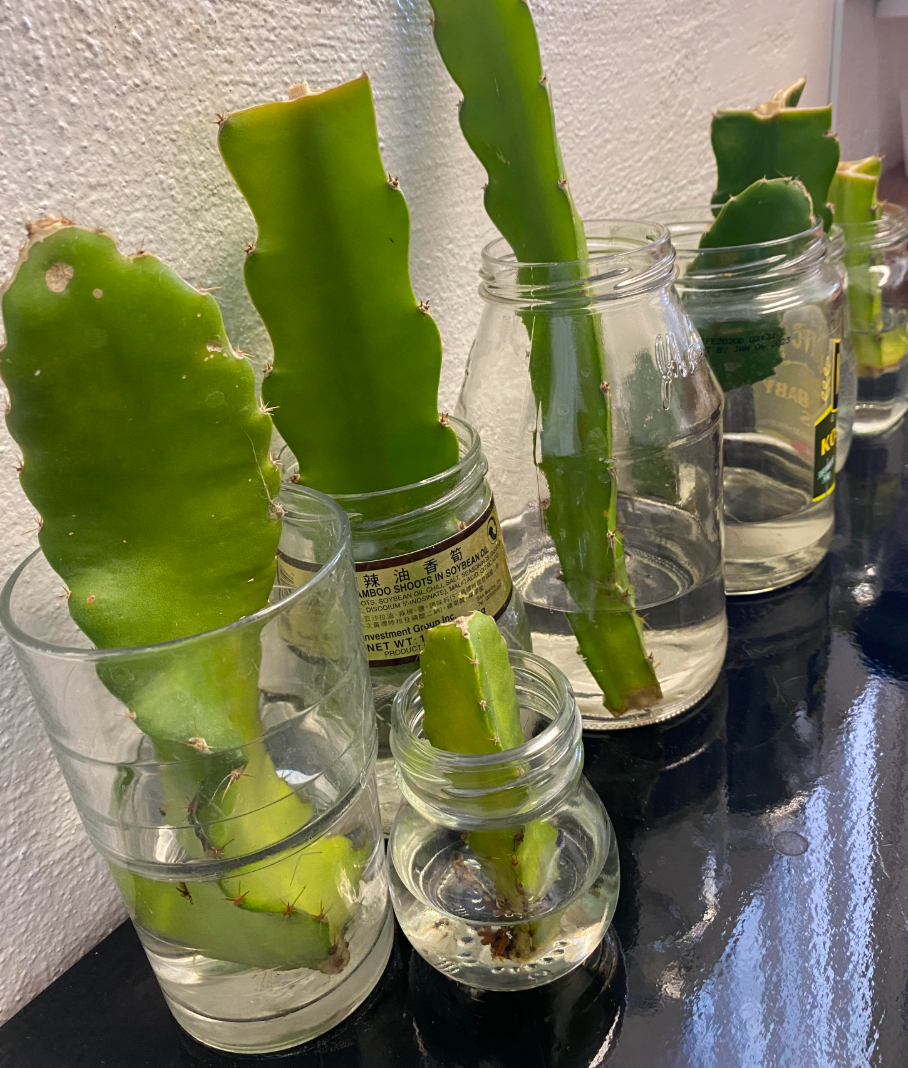
Place the callused end of the cutting into the water. If you used a rooting hormone powder, dip the callused end in the powder first.
4. Maintain and monitor
Change the water every few days to keep it fresh and prevent mold or algae from growing.
Check the cutting for signs of root development. Roots should start to appear within a few weeks.
Once roots have formed, you can transplant the cutting into a pot with well-draining soil. Wait for the root system to become well-established (about 1–2 inches long) before moving it to soil. For rooting dragon fruit cuttings in water, you can add rooting hormone, but it is not necessary. The most important part of the process is to first let the cut end of the cactus segment form a callus to prevent rot.
Here is what you can add to the water, along with a full guide to rooting your dragon fruit:

Additives for water rooting
Rooting hormone: While dragon fruit can root easily without it, a rooting hormone solution can speed up the process and encourage more robust root growth.
Commercial products: You can use commercial liquid rooting hormone or dissolve rooting hormone powder into warm water.
Willow water: As a natural alternative, you can create "willow water" by soaking chopped willow branches in water for 24 hours. Willows contain natural auxins that promote rooting.
Honey: This can act as both a natural rooting stimulant and an antibacterial agent. Mix two tablespoons of raw honey with two cups of boiled water, let it cool, and use it for your cuttings.
Cinnamon: This works primarily as an antifungal agent to prevent rot. Add a small pinch to the water.
Worm castings: Adding a solution of worm castings (worm poop) to the water can introduce natural growth hormones to encourage rooting.
What are signs that cutting is rotting in water?
The most common signs of a dragon fruit cutting rotting in water are yellowing and a soft, mushy texture. A healthy cutting should remain firm and green.
Signs of rot
Appearance and texture
Yellowing flesh: The skin of the cutting will start to turn yellow at the bottom, near the water level. This yellowing will spread upwards as the rot progresses.
Soft and mushy texture: The most definitive sign of rot is if the base of the cutting feels soft and mushy, similar to a "mashed potato". A healthy cutting should be firm and hard.

Black or dark discoloration: In some cases, the tissue may turn black or dark brown, especially at the point where it was cut.
Lesions or blotches: Fungal or bacterial infections can sometimes cause reddish-brown or dark lesions on the stem.
Other indicators
Unpleasant smell: As the plant tissue decays, it can produce a foul, rotting odor from the water.
Lack of root development: After several weeks, if the cutting is not developing roots and is showing any of the signs above, it is likely rotting instead.
What to do if your cutting is rotting
If you see signs of rot, you can try to save the cutting if the rot hasn't spread too far.
Remove it from the water and cut off all the affected, soft tissue with a clean, sharp, sterilized knife.
Let the new cut end dry and form a callus for at least 7 to 10 days in a warm, shady spot. This is the most important step to prevent rot.
Attempt rooting again, ensuring the water is changed frequently (every few days) and that only a small portion of the callused end is submerged.


Comments